

Flake Epoxy Garage Floor
A ground slab, an epoxy base coat, color flakes thrown into it and a clear topcoat, the most widely offered garage system.
Typically from $6/sq ft
Garage floors and commercial floors · Hayward, CA
Epoxy Floors Grain Hayward is a local guide and availability check for epoxy and polyaspartic floors in Hayward — flake, solid-color and metallic coatings in the garages of post-war tract homes, hillside houses and townhomes, plus the warehouse, commercial kitchen, auto shop, retail, gym and clinic floors of the city's business districts. Price a garage by the number of cars or a business floor by length and width, see what the concrete may need before it is coated, and find out whether a local installer has bookings open for your ZIP yet.
Notify me when bookings open · typical prices in about 30 seconds
Bookings aren't open yet. Leave your name and number; your message is recorded, and you'll get one message when a local installer is available.
 Illustration
AI-generated illustration. The people shown are not real installers.
A ground slab, an epoxy base coat, color flakes thrown into it and a clear topcoat, the most widely offered garage system.
Typically from $6/sq ft

A fast-curing polyaspartic or polyurea coating, installed in a day or two, with a clear view of what it does well and where epoxy still wins.
Typically from $8/sq ft

The grinding, repair and moisture testing that decide whether a coating still looks right in a few years.
Typically from $1/sq ft

One pigmented epoxy color rolled over a ground slab, with grit for grip if wanted, the plain and affordable garage system.
Typically from $5/sq ft

Pearlescent pigments swirled into clear epoxy over a colored base, the decorative garage floor.
Typically from $10/sq ft

Grinding off a peeling or old coating so the floor can be recoated on a sound bond.
Typically from $7/sq ft
 Illustration
Typical total $2,730–$4,730
 Illustration
Typical total $6,750–$11,700
 Illustration
Typical total $1,780–$3,370
 Illustration
Typical total $18,700–$35,100
 Illustration
Typical total $14,000–$26,200
 Illustration
Typical total $11,500–$23,300
Hypothetical typical projects. Pictures are AI-generated concept illustrations, not photos of completed installations; no installation was performed or arranged through this site; prices are typical Hayward area market ranges, not quotes.
Answer a few quick questions, one at a time: garage or business, the size, the system and the slab. The total updates as you go and uses the same Hayward area market figures shown on every page of this site.
Takes about 30 seconds · no sign-up to see your range
Check availability and get your Hayward area price range
Bookings aren't open yet — a typical Hayward range in about 30 seconds.
The Hayward Fault runs through the city, downtown included, and creeps slowly, typically 3.5–6.5 mm a year (USGS). Curbs on downtown cross streets are offset by a few inches, and the USGS lists cracked foundations among the signs. A rigid coating over a moving crack may reflect it through, so the repair decides more than the flake color. Garages sit on slabs poured over decades; whether a given crack is old shrinkage or still moving is for an installer to judge on site.
| Crack type | What it usually is | Typical repair before coating | What to expect |
|---|---|---|---|
| Hairline | Shrinkage as the slab cured | Route, fill with a rigid or semi-rigid filler, grind flush | Usually stays hidden under the coating |
| Control-joint line | A saw cut that was built to move a little | Cleaned and filled with a flexible joint filler, or left as a joint | May show as a thin line; the joint is meant to move |
| Settlement or stepped crack | One side sits higher than the other | Ground flush or patched with a repair mortar | A moving crack may reflect through; the installer judges whether the slab is still moving |
| Wide crack that keeps opening | Ongoing movement, drainage or soil issues | Repair by a concrete or foundation trade first, then coat | Coating is cosmetic here, not a fix |
Wording is general. A coating hides cracks; it does not stop them, and a moving crack may show again.
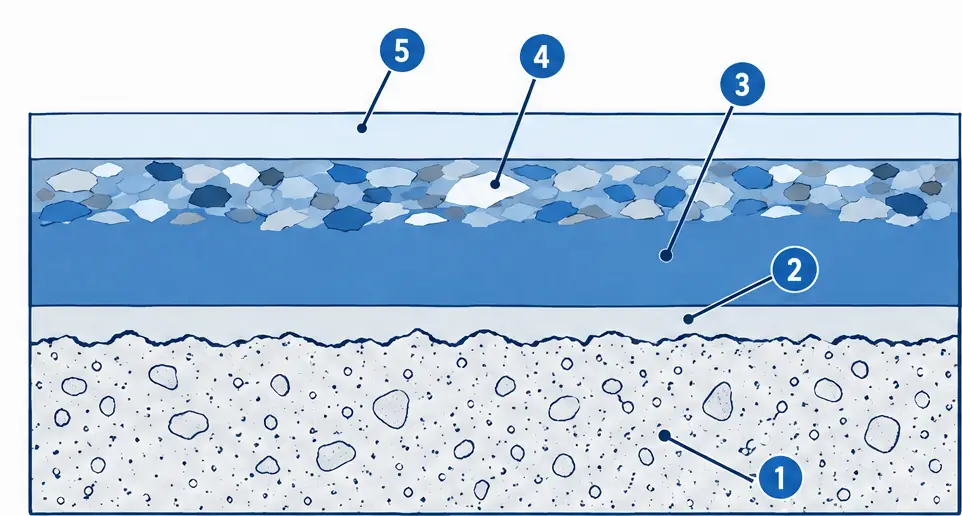
Fits Fits a two-car garage where color flake hides dust, tire marks and small slab flaws, and the owner wants the most widely offered system.
Typically $6–$10 per sq ft about $2,520–$4,200 for 420 sq ft, installed
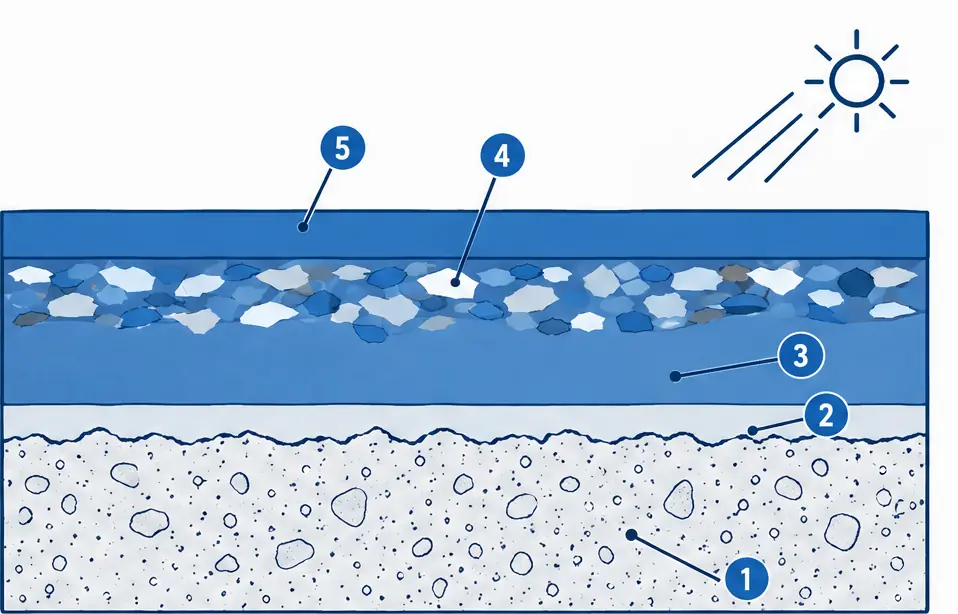
Fits Fits a garage that has to be back in service sooner, or one with a door that stays open to sun, where a UV-stable topcoat helps.
Typically $8–$13 per sq ft about $3,360–$5,460 for 420 sq ft, installed
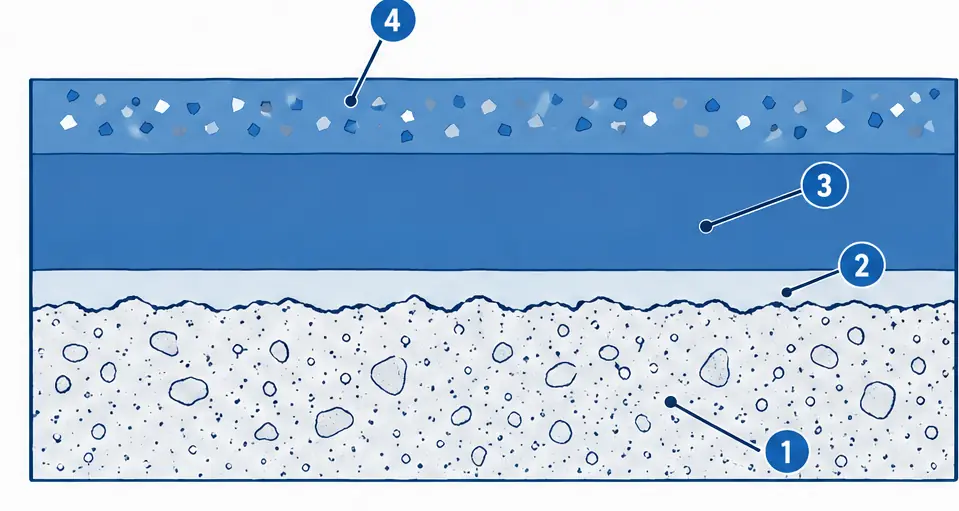
Fits Fits a workshop garage or a budget project, where a smooth easy-to-sweep color matters more than decoration.
Typically $5–$9 per sq ft about $2,100–$3,780 for 420 sq ft, installed
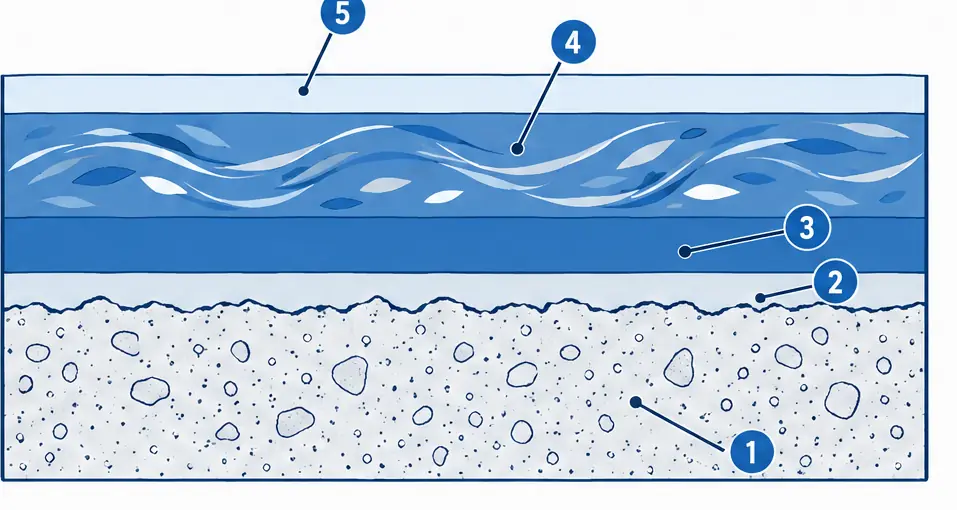
Fits Fits a showpiece garage or a showroom entrance where the swirled look is the point.
Typically $10–$16 per sq ft about $4,200–$6,720 for 420 sq ft, installed
IllustrationEpoxy coatings for warehouse aisles, docks and racking floors, with the honest comparison against polished concrete.
Often considered Solid-color epoxy with grit
Typically from $5 per sq ft
IllustrationUrethane cement and coved-base floor systems for restaurant and commercial kitchens, with the Alameda County plan check explained.
Often considered Urethane cement (heavy-duty, kitchens and wet areas)
Typically from $12 per sq ft
IllustrationFloor coatings for repair bays, detail shops and workshops, built for oil, brake fluid and jack stands.
Often considered Solid-color epoxy with grit
Typically from $5 per sq ft
 Illustration
Decorative floors for stores and showrooms, installed in phases so the shop can keep trading.
Often considered Flake epoxy system
Typically from $6 per sq ft
 Illustration
Where a coating suits a gym or studio, and where rubber flooring is the honest answer.
Often considered Solid-color epoxy with grit
Typically from $5 per sq ft
 Illustration
Seamless, easy-to-clean floors for private clinics, scheduled around appointments.
Often considered Solid-color epoxy with grit
Typically from $5 per sq ft
Price a business floor Each kind of floor has its own page under Commercial floors in the menu.
 Empty, measure, map the cracksThe floor is cleared and measured wall to wall, and every crack, oil stain and patch of old paint is noted, because on an older Hayward slab those decide the price more than the flake color.
 Grind to a profileA diamond grinder with a dust shroud and a vacuum removes the smooth top skin so the primer can bond; acid etching is a weaker substitute.
 Fill cracks, check moistureCracks are opened, filled and ground flush, and the slab is tested for moisture where the data sheet calls for it; many post-war slabs have no vapor barrier.
 Base coat and flakeThe base coat is rolled out while it is still workable and color flake is broadcast by hand into the wet film, to full or partial coverage.
 Scrape, then topcoatOnce the base sets, loose flake is scraped and vacuumed off, and a clear topcoat seals the surface and sets its gloss and texture.
 Cure before useFoot traffic and cars return after the times on the product data sheet for the day's temperature and humidity, not on a fixed promise.
How the main garage and commercial floor systems compare. Ranges are general; the product data sheet decides for a specific job.
| System | UV and yellowing | Speed on site | Odor while curing | Back on the floor | Typical Hayward price per sq ft |
|---|---|---|---|---|---|
| Epoxy (base coat) | Can amber in sunlight when the door stays open | Slower; long working time bonds well to a ground slab | Noticeable, depends on the product | Foot traffic in a day or so, vehicles often several days | $5–$10 |
| Polyaspartic or polyurea | Aliphatic types are generally more UV-stable | Fast; some systems install in one day | Often stronger while curing | Foot traffic next day, vehicles per the data sheet | $8–$13 |
| Hybrid: epoxy base, polyaspartic top | Topcoat carries the UV protection | Two stages, a day or two on site | Moderate | Per the topcoat data sheet | $7–$12 |
| Urethane cement (commercial) | Not a garage choice; made for heat and washdowns | Thick trowel-applied layer, a multi-day job | Planned around occupants | Per the data sheet, often 3–5 days for kitchens | $12–$20 |
Market estimates, not a quote. Cure and return times depend on the product, the temperature and the humidity; the data sheet governs. No floor is slip-proof: texture adds grip and also makes cleaning harder.
Pick a base color and two to four flake colors. The swatches show the same mix as a full broadcast, where the flakes hide the base completely, and as a partial broadcast, where the base shows between them.
On-screen approximation; ask for a physical sample board.
A price per square foot means little without the work behind it. These are the lines to look for.
Epoxy Floors Grain Hayward covers Hayward Highland, Mission-Garin, Burbank, Glen Eden, Harder-Tennyson, Tennyson-Alquire, Mt. Eden, Southgate, I-880 Industrial District — pick your neighborhood from the menu for local details and ZIP codes.
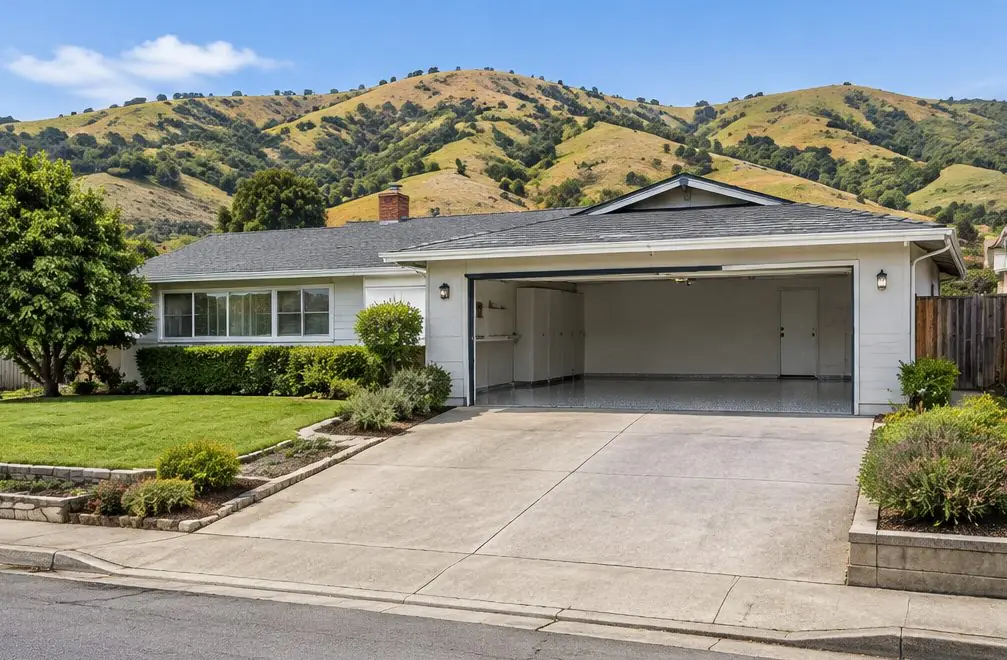
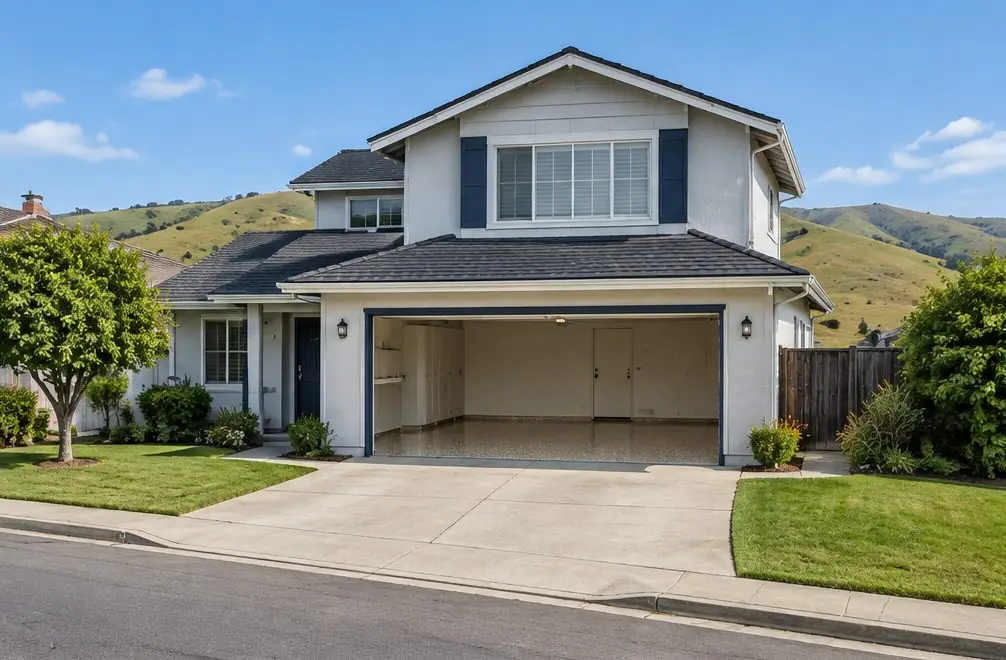
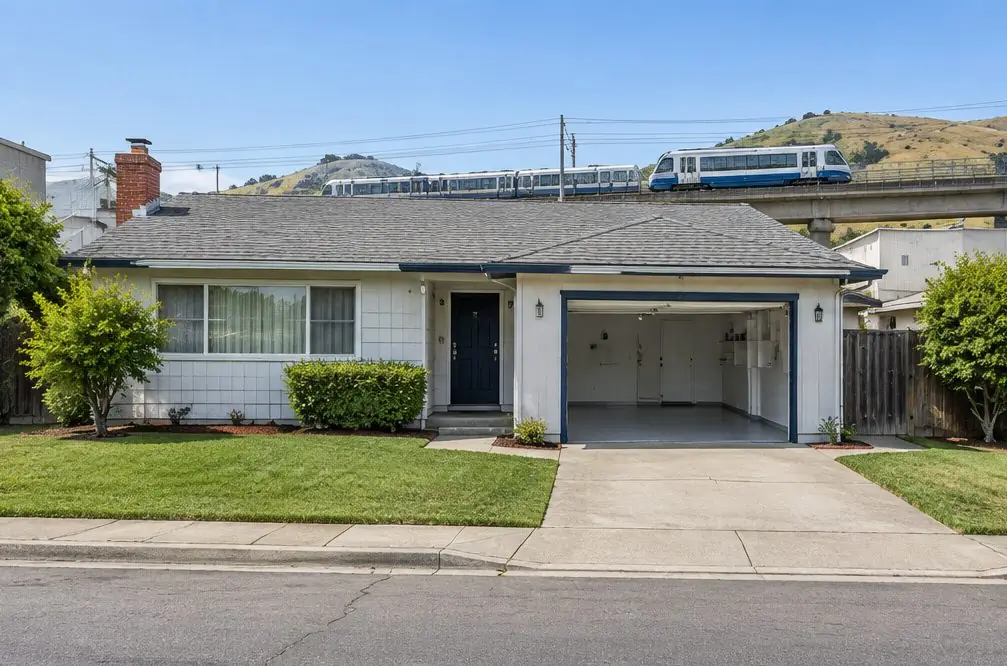
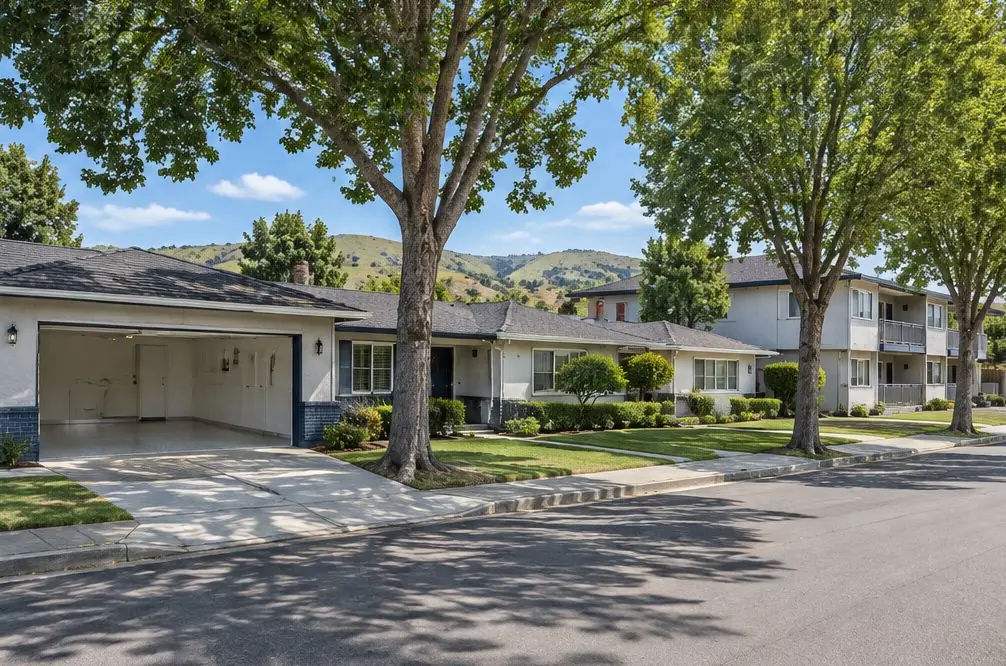
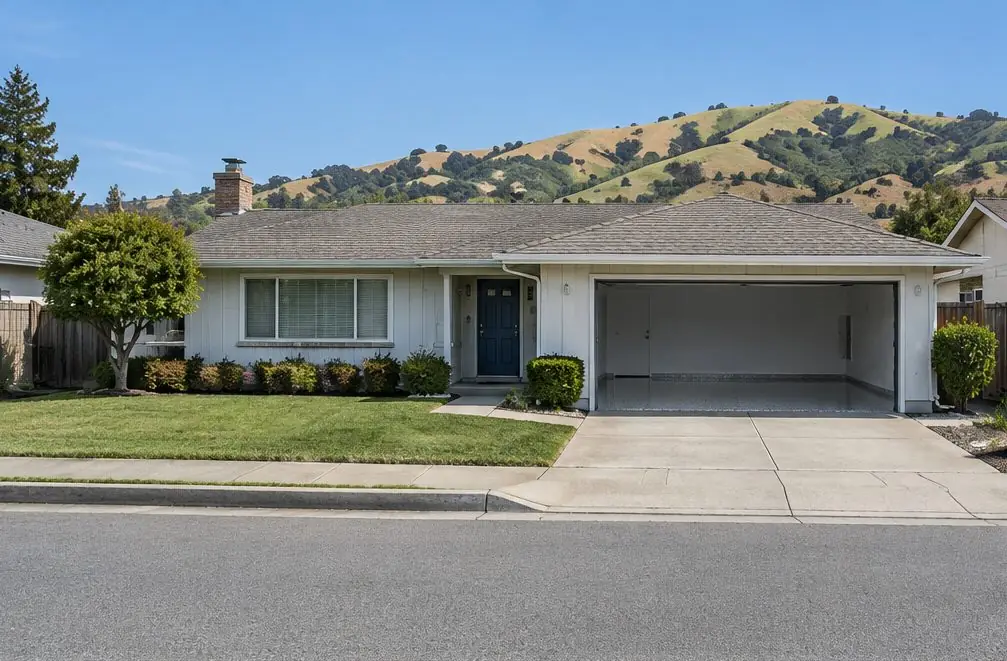
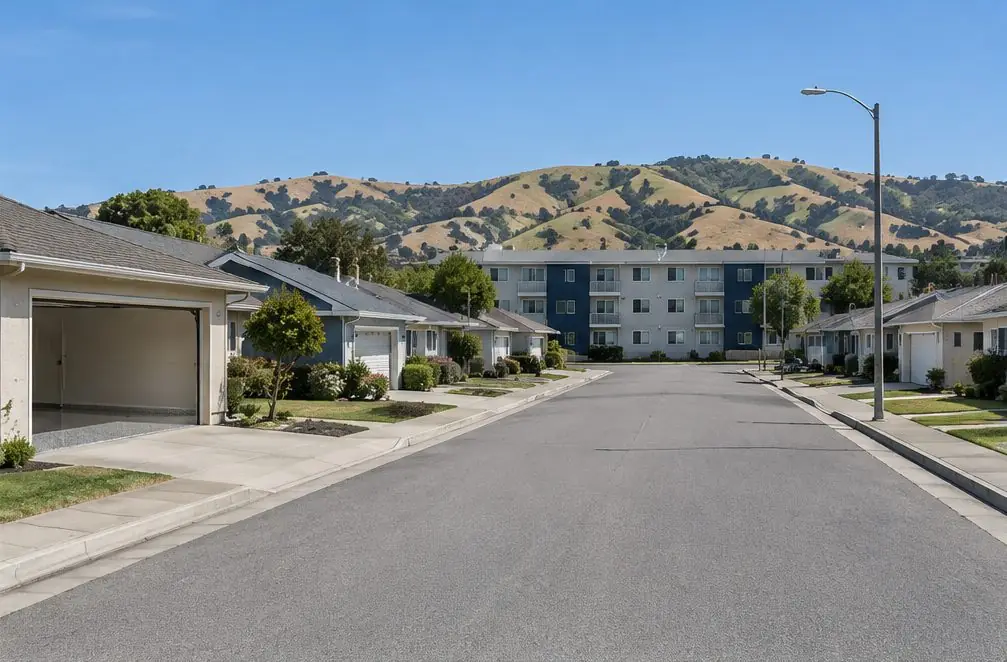
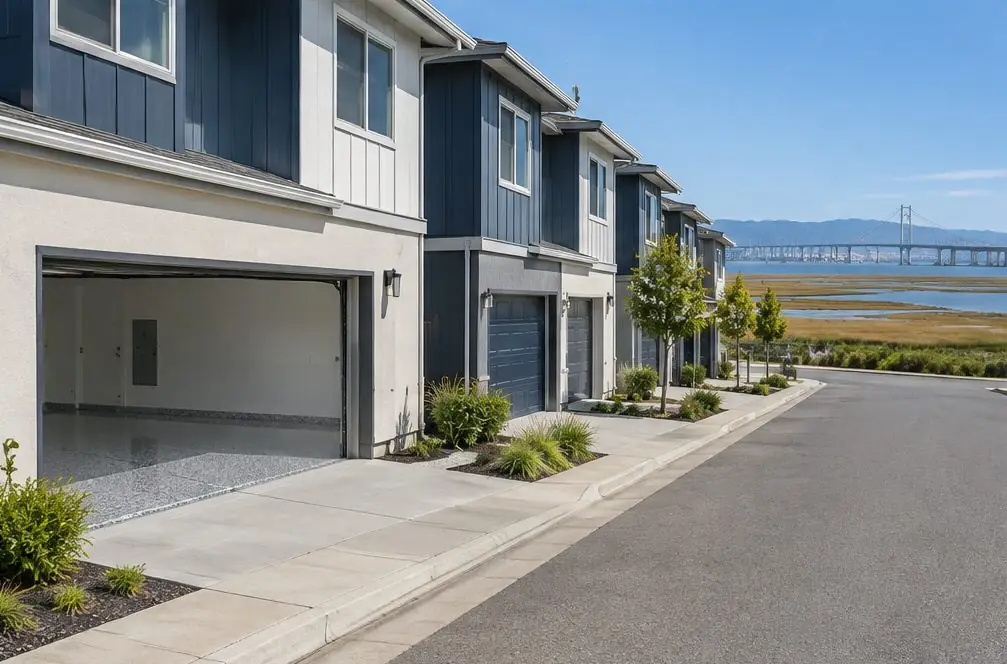
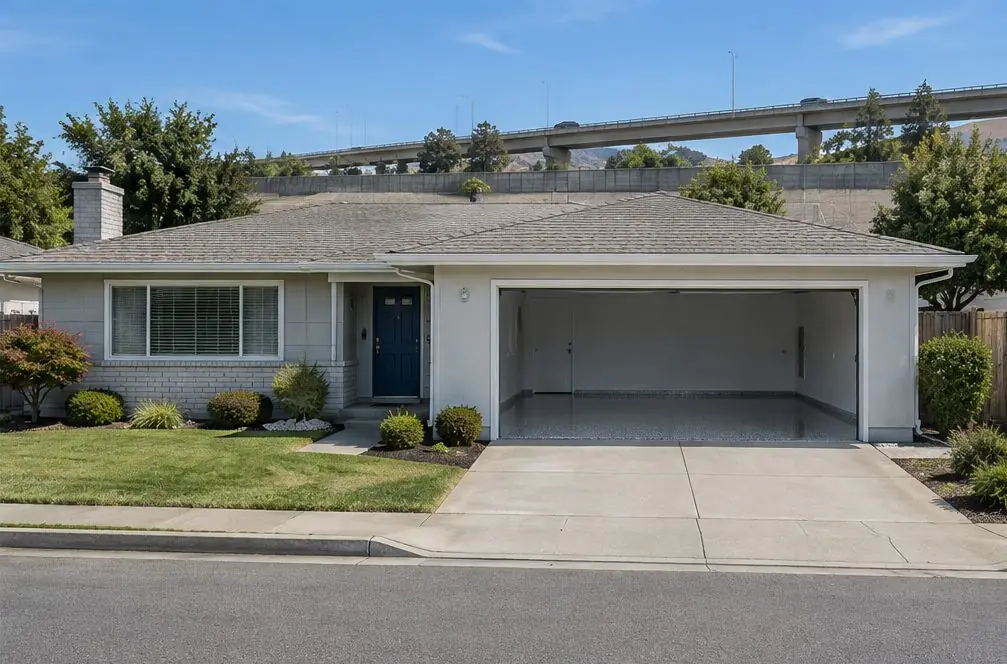
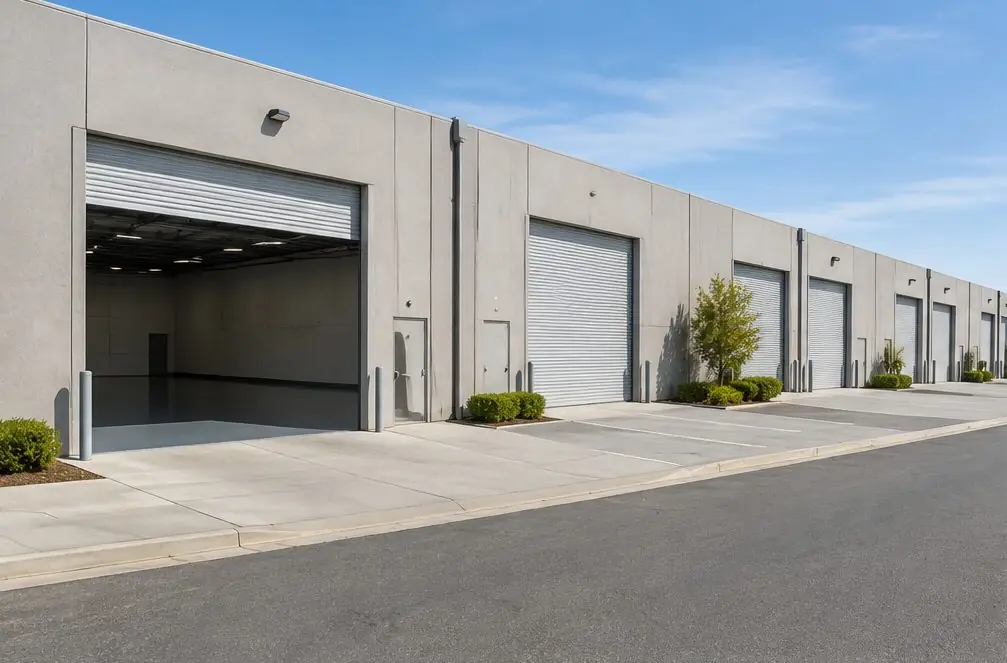
Typical Hayward ranges in 2026 are about $6–$10 per square foot for full-broadcast flake epoxy, $8–$13 for polyaspartic flake, $5–$9 for solid-color epoxy and $10–$16 for metallic. A 420 sq ft two-car garage on a sound slab is therefore roughly $2,520–$4,200 for flake and $3,360–$5,460 for polyaspartic flake. Crack repair, old-coating removal, a damp slab and extras like stem walls add to that. The ranges on this site are market estimates, not quotes.
Neither wins everywhere. Polyaspartic topcoats are generally more UV-stable and cure faster, so they suit a garage with the door open to sun or one that must return to service soon. Epoxy is often used as the base coat because its longer working time bonds well to a ground slab, and it costs less. Many floors combine the two.
No. A coating covers cracks; it does not stop a slab from moving. Hayward sits on the Hayward Fault, which creeps slowly, so a moving crack may reflect through. Cracks are filled and ground flush before coating, and the installer judges whether the slab is still moving.
It is a good idea. Many post-war slabs were poured without a vapor barrier, and moisture coming up through the concrete can push a coating off. Installers test with a plastic sheet, a calcium chloride kit or in-slab humidity probes, and where readings are high they use a moisture-mitigating primer or reconsider the job.
It depends on the system, the temperature and the humidity. Many polyaspartic systems can be installed in one day and take foot traffic the next day; vehicles return after the time on the data sheet, often 24 hours to several days. Epoxy systems usually take longer, often several days before a car.
Any coated floor can be slippery when wet or oily. Broadcast flake and a fine grit in the topcoat add texture and grip, and the amount of grit is a trade-off between grip and ease of cleaning. No floor is slip-proof.
Usually not directly. Peeling means the bond failed, so the loose coating is ground off down to sound concrete before anything new goes on. The estimator lists old-coating removal as a separate slab condition.
Often in phases or after hours. Installs are scheduled after hours, on weekends or area by area so part of the floor stays in use; odor and ventilation are planned around occupants, and return to carts and forklifts follows the data sheet.
California's food code asks for floors that are smooth, durable, nonabsorbent and easily cleanable, with a coved base where the floor meets the wall. The county environmental health department reviews plans for new or remodeled food facilities. Kitchens with hot washdowns often use urethane cement. Nothing here is a county approval.
Garages and business floors across Hayward, including Burbank, Glen Eden, Harder-Tennyson, Hayward Highland, Mission-Garin, Mt. Eden, Southgate, Tennyson-Alquire and the I-880 industrial district. The availability check shows whether bookings are open for a ZIP.
Installers featured on this site are independent businesses. The installer's legal name and business details are published on this site before bookings open. Warranty terms are set by the installer and the coating manufacturer; ask what is covered and for how long.
Typical Hayward area floor coating prices, square foot by square foot
Pick garage or business, the size and the system, and see the range. No contact details needed. Bookings open here once a local installer is named on this site.
Bookings aren't open yet. Leave your name and number; your message is recorded, and you'll get one message when a local installer is available.